Generated 243 Qualified Leads in 6 Months for a B2B Industrial Equipment Dealer
A B2B industrial equipment dealer in Chicago, Illinois, USA wanted better results from organic search, but the real problem was not just traffic. Some visitors were already coming to the website, so this was not a case where visibility was completely missing. The bigger issue was that too many of those visits were not turning into strong business leads.
Many people were only browsing and then leaving. Some inquiries were too general. Some were not a good fit at all. So even when the site got attention, it was not helping enough where it mattered most.
The goal was simple. Bring in better visitors, help them understand the offer faster, and turn more of them into real sales conversations.
1. Why the old setup was not working well
The website had equipment pages, category pages, and a few supporting pages, but much of it felt too plain and too basic for serious B2B buyers.
A business buyer usually does not land on a page and fill a form in a few seconds. Most people first want to understand:
• what kind of equipment is offered
• whether it fits their business need
• which industries it is meant for
• whether this dealer looks reliable
• what step makes sense next
That part was weak on the site.
Some important pages looked more like simple listings than pages built for real decision makers. A visitor could read them and still not feel clear enough to make contact.
There was another issue too. In this market, people do not always search using exact product names. Many search by problem, use case, process, or industry need. The site was not covering enough of that type of search.
So the website was missing chances in two ways. It was not attracting enough of the right traffic, and it was not doing enough with that traffic after people landed.
2. Where the lead quality was breaking
Once the site was reviewed closely, a few weak points stood out.
2.1 Main money pages were too basic
Important equipment category pages did not explain enough in plain English. They named product areas, but they did not go far enough into real use, buyer fit, or business value.
2.2 Product family pages were not doing enough selling
Some product family pages had the right topic, but they were not helping a serious visitor feel confident. They needed more useful explanation, not just extra wording.
2.3 Path toward inquiry was weak
Forms were there, but pages before forms were not doing enough work. A visitor needed more clarity before taking that step.
2.4 Technical issues were quietly making things harder
A few important pages were heavier than needed. Some page connections were weak. A few useful pages were not getting enough support from the rest of the site.
2.5 Trust from outside the website was also weaker than it should have been
This business needed stronger signals from relevant websites in the industrial space. Without that, important commercial pages were carrying too much of the load on their own.
3. What was changed first
The first step was not to touch everything at once.
Work started with pages that had the best chance of bringing qualified leads. That included:
• top category pages
• product family pages
• pages already getting impressions
• pages where business intent was strong but performance was weak
After that review, Search Handle focused on improving the exact parts of the site that were closest to lead generation.
4. What improved on the page itself
Main commercial pages were rewritten in a more practical way.
Instead of sounding too general, they started explaining things in a way a business buyer could understand faster. Better versions of those pages gave more clarity around:
• what the equipment was used for
• what kind of problem it solved
• which industries commonly needed it
• who the page was really for
• why someone should take the next step
This made pages feel more useful and more serious.
Product family pages also became stronger. They were adjusted so a visitor could understand the offer without having to guess too much. That mattered because people in B2B do not only want information. They want confidence before they reach out.
5. What new content helped bring better traffic
The site also needed more pages around how real buyers search.
That part was missing before.
New supporting content was added around things like:
• equipment use by industry
• common buyer questions
• business use cases
• problem based searches
• searches people make when comparing solutions
This helped the website show up for more relevant searches. It also helped main commercial pages because those pages were no longer standing alone. They had stronger topic support around them.
6. What was fixed on the technical side
Technical work helped stronger pages perform better.
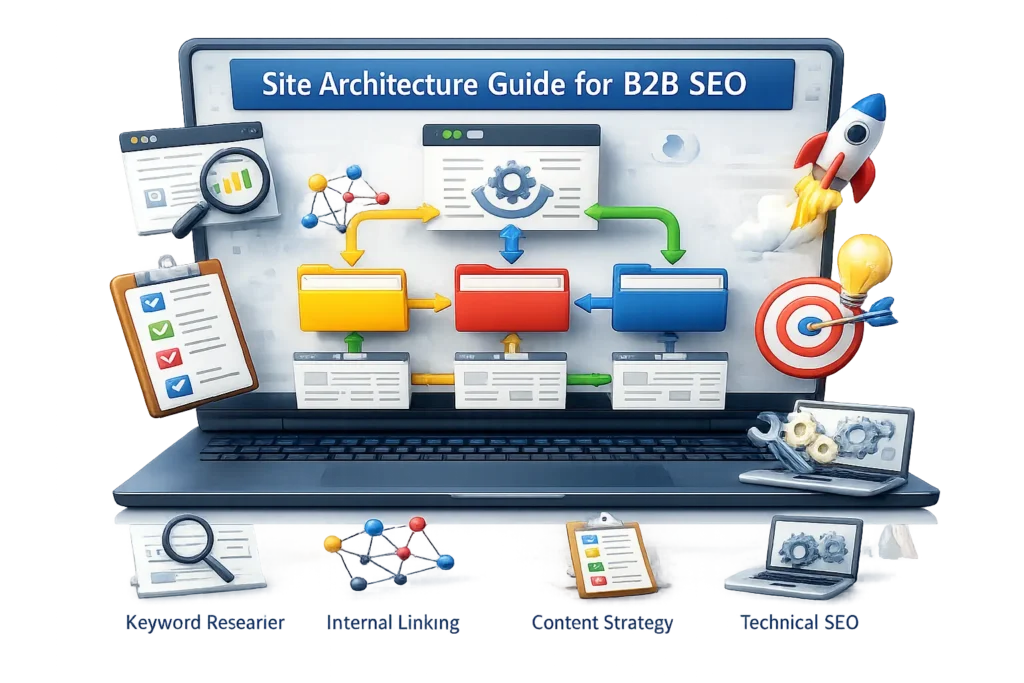
One big improvement was internal linking.
Before that, some useful pages were too disconnected. A visitor could reach one page, but there was no smooth path to another helpful page. Search engines also were not getting a clear picture of which pages mattered most.
That was improved by making page connections more logical.
For example:
• industry pages supported right category pages
• category pages led to product family pages
• supporting pages pointed users toward inquiry focused pages
• related commercial pages helped strengthen each other
Page weight was also cleaned up on key templates.
That included:
• compressing large images
• reducing unnecessary heaviness on important sections
• making major pages smoother to load
• improving overall usability on commercial pages
Some weaker page relationships were also cleaned up so stronger parts of the site had better support.
7. What happened off the website
This part also mattered a lot, because in B2B SEO, good pages alone are not always enough. Even if a website has the right content, it still helps when a business starts getting stronger trust signals from outside sources that make sense for its industry.
So the off page work stayed focused on relevance, not random backlink numbers.
The goal was to build support from places that actually fit an industrial equipment business. That included:
• industrial directories
• relevant business listings
• contextual backlinks from related websites
• useful mention recovery opportunities
• stronger support for important commercial pages, not just the homepage
This helped in two ways.
First, it gave the website better external trust. Second, it helped some of the more important commercial pages feel better supported instead of carrying all the weight on their own.
The work was also kept practical. Instead of trying to get links from any website possible, focus stayed on pages and platforms that could make sense for this type of company. That made the overall SEO profile look more natural and more useful for long term growth.
8. Why the leads got better, not just higher
This happened because the full journey improved. The website started attracting visitors with stronger business intent. Pages explained the offer in a clearer and more practical way. Site structure also made it easier for people to move to the right pages without getting confused or leaving too early.
Technical improvements helped as well, because cleaner and smoother pages usually make a website feel more trustworthy. On top of that, off page work added stronger trust signals from outside sources that were relevant to this business.
9. Result
Within 6 months, the website generated 243 qualified leads, up 340% compared to the previous 6 month period. More importantly, the business started getting more right fit buyers instead of too many general or low-quality inquiries.
This worked because the website stopped feeling like a simple product catalog and started doing a better job of guiding the right buyers.