SEO Case Study: Increased Leads by 180% for a B2B Laboratory Equipment Company
A B2B laboratory equipment company based in Boston, Massachusetts, USA already had a website with a solid structure and useful information. The main pages were linked together reasonably well. But even with that in place, too many visitors were staying in research mode instead of moving toward serious inquiry.
Buyers were reading product information and spending time on key pages, but many of them were still not moving toward quote requests, demo discussions, or real business conversations.
In the lab equipment market, this matters a lot. Buyers usually compare carefully, check whether the equipment fits their work, and try to feel sure before they contact a supplier. So when a website helps people learn but does not help them take the next step, good traffic gets wasted.
1. Where the website was falling short
1.1 Product pages gave details, but not enough clarity
Some product pages explained features and technical details, but they did not clearly show where the equipment fit in a real buying situation. A buyer could read the page and still not feel ready to contact the company.
1.2 Different lab needs were not separated clearly enough
A research lab, a testing lab, and a commercial lab team often search in different ways, but the site was not separating those paths clearly enough. Because of that, different buyers were often getting a similar journey even when their needs were not the same.
1.3 Supporting content, internal paths, and outside trust were still weak
The website needed more useful content around equipment applications, lab workflows, buyer questions, comparison stage searches, and related equipment needs. Internal paths also had weak spots, and outside trust was still limited.
That included things like:
• what type of lab the equipment was right for
• what kind of buyer or team it suited best
• how one product category was different from another
• what page should be read next
• when it made sense to contact the company
So even though the website had useful information, it was still not doing enough to turn interest into inquiry.
2. What became the main focus
At that point, Search Handle focused on one clear goal.
The website needed to do a better job of taking buyers from product research to real business inquiry.
That changed how the work was planned. Instead of treating every page the same way, more attention went to the parts of the website that could help lead growth the most.
That included:
• high value equipment pages
• category pages with lead potential
• application related pages
• helpful content tied to buyer questions
• internal paths leading to commercial pages
• off page support around key product topics
Once the focus moved there, the work started connecting more directly with inquiry growth instead of only page improvement.
3. What changed on the core pages
The biggest change was that the main pages stopped working like simple reference pages.
Important product and category pages were improved so buyers could understand not only what the equipment did, but also:
• what kind of setup it fit
• what type of lab need it matched
• who it was most useful for
• where it made sense in real workflows
• why it was worth taking the next step
In total, 9 key commercial pages were improved during the main work period.
This made the pages more useful in a real buying journey.
Instead of only listing technical details, they started helping visitors understand fit, use, and value more clearly. That matters because buyers in this market usually want to reduce risk before reaching out.
The website also became better at moving people from one useful page to another. Instead of leaving visitors on one page with no clear next step, related pages started guiding them toward application pages, category pages, nearby product areas, and inquiry focused sections.
That helped reduce dead ends in the middle of the journey.
4. What supporting content helped the most
One big reason lead growth improved was that the website stopped depending too much on a few main product pages.
More useful content was added around the kinds of searches serious buyers often make before they contact a supplier. That included content around:
• equipment applications
• lab workflow needs
• setup related concerns
• buyer questions before purchase
• comparison and evaluation searches
• related problems people search before choosing a vendor
Along with the main pages, 13 to 15 supporting pages were added or improved around these topics.
This helped in two clear ways.
First, it brought in better traffic from more specific searches.
Second, it gave the main commercial pages stronger support, so they were no longer standing on their own.
That made the whole section feel more complete and more in line with how buyers actually search in this market.
5. What changed in technical SEO
Technical SEO helped remove problems that were making the better pages less effective.
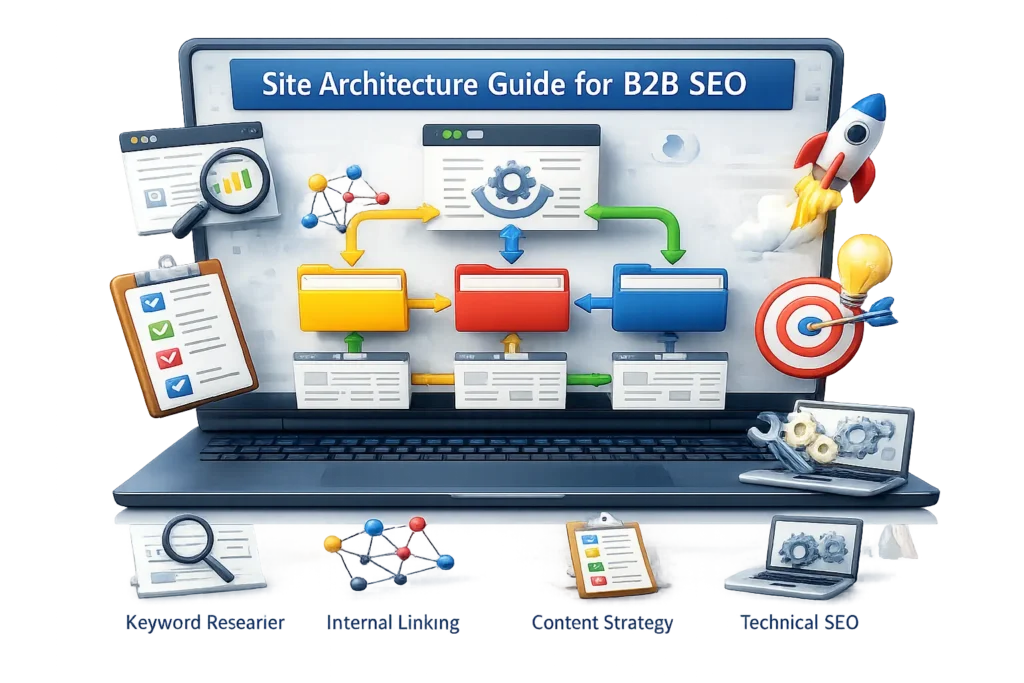
5.1 Internal linking became more useful
Equipment pages started getting better support from the right surrounding pages. Application pages linked more naturally to category pages, and supporting pages did a better job of guiding people toward higher intent sections.
Across the commercial section, internal links were added and adjusted to connect supporting pages with category and product pages more clearly.
This made the path easier to follow for visitors and also made page importance clearer for search engines.
5.2 Heavy sections were cleaned up
Some important templates were heavier than they needed to be. Large visuals and bulky sections were cleaned up, and page weight on key templates was reduced by around 25% to 28%.
That made important pages smoother and easier to use.
5.3 Page relationships became clearer
Some strong pages were not getting enough structural support before. That improved once related topics, category pages, and support pages were arranged in a cleaner way.
5.4 The commercial section became easier to support
Once page hierarchy, internal paths, and page flow improved, the main commercial area became easier to crawl, easier to understand, and easier to strengthen over time.
6. What happened off the website
Off page work also mattered here because a laboratory equipment company often needs more trust than a website can build on its own.
6.1 New business and supplier profiles were built
Around 80 to 82 relevant business and supplier profiles were created on platforms that made sense for the company.
This helped the company appear in more places where serious buyers might check suppliers and vendors.
6.2 Guest posts and industry placements were added
The off page work also included 37 relevant guest posts and niche placements on websites connected to scientific equipment, lab work, research, healthcare, and industrial supply.
These were not random posts. The focus stayed on topics that actually matched the business, such as equipment use, workflow needs, buying points, and setup related concerns.
6.3 Important inner pages also got outside support
Off page support was not limited to the homepage. Some of it also helped strengthen inner pages connected to equipment categories, applications, and other topics closer to real buyer intent.
6.4 Why this helped
This made the company look more trusted outside its own website. Listings added presence, guest posts added relevance, and inner page support gave more backing to the pages that needed better visibility.
7. Result and final takeaway
Within 5 months, leads increased by 180%.
The website was no longer just helping people read about the equipment. It started helping them make sense of what fit their lab needs, what to look at next, and when it was worth contacting the company.
That shift mattered more than any one-page update. The site became more complete around the real buying journey, which helped turn more interested visitors into actual inquiries.