How B2B Companies Can Track and Measure What Their SEO is Actually Doing
Most B2B companies invest in SEO and then wait. They check their rankings occasionally, look at their traffic numbers once a month, and hope that something is working. But hope is not a strategy, and numbers without context are just noise.
This guide breaks down exactly what to track, how to measure it, and how to connect your SEO activity to real business outcomes like leads and revenue.
Why Most B2B Companies Measure SEO Wrong
The most common mistake B2B companies make when measuring SEO is focusing on the wrong metrics. Rankings and traffic are the numbers most people watch, but they tell you very little on their own.
A website can rank on page one for dozens of keywords and still generate zero leads if those keywords do not match what actual buyers are searching. A website can get thousands of visitors a month and still produce no business if those visitors are not the right people.
The goal of B2B SEO is not to rank. It is not even to get traffic. The goal is to generate qualified leads from the right buyers. Every metric you track should connect back to that goal in some way.
The Metrics That Actually Matter in B2B SEO
Organic Traffic from Buyer Intent Keywords
Total organic traffic is a vanity metric if it includes everyone. What matters is how much of that traffic is coming from keywords that signal buying intent. A B2B company getting five hundred monthly visitors from searches like “office furniture supplier for corporate offices” is in a far better position than one getting five thousand visitors from searches like “types of office furniture.”
Segment your organic traffic by keyword type in Google Search Console. Look at which queries are actually driving clicks to your site and whether those queries match the language your actual buyers use.
Leads Generated from Organic Traffic
This is the most important number in B2B SEO and the one most companies never track properly. Every contact form submission, phone call, and email inquiry that came from an organic search visitor should be recorded and attributed.
Google Analytics allows you to set up goal tracking so that every time someone fills out your contact form after arriving from organic search, it is counted as a conversion. Without this setup, you have no way of knowing whether your SEO is actually producing leads or just producing traffic.
Conversion Rate by Landing Page
Not all pages convert equally. Some pages bring in the right visitors and convert them well. Others bring in traffic that never converts. Knowing which pages have a high conversion rate and which ones are leaking visitors helps you prioritize where to improve.
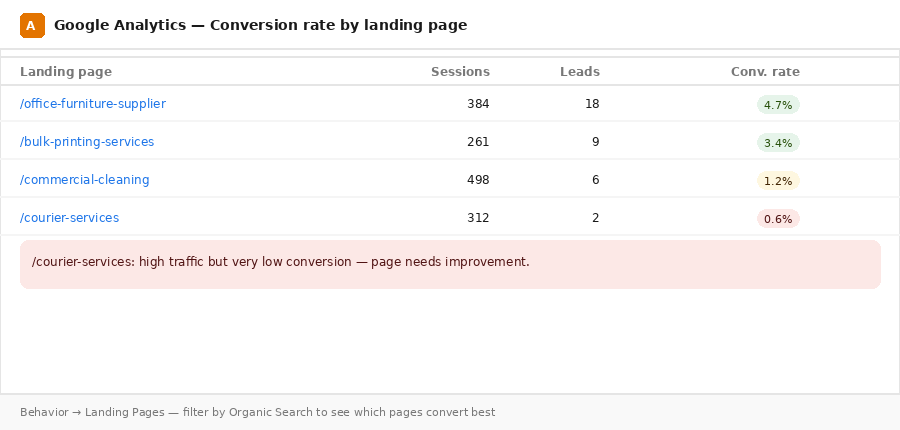
A service page with high traffic but a low conversion rate is a clear signal that something on the page is not working. Either the wrong people are arriving, or the page itself is not giving them enough reason to reach out.
Keyword Ranking Progress Over Time
Rankings still matter, just not in isolation. Tracking how your target keywords move over time tells you whether your SEO efforts are gaining traction. A keyword moving from position thirty to position twelve over three months is meaningful progress even if it has not yet produced traffic.
Track a focused list of keywords that represent your actual buyers rather than trying to monitor hundreds of terms at once.
Backlink Growth
The number and quality of websites linking to yours is one of the strongest signals Google uses to determine how authoritative your site is. A steady growth in quality backlinks is one of the clearest indicators that your SEO foundation is strengthening.
Pages Indexed and Crawl Health
Google can only rank pages it can find and index. Tracking how many of your pages are indexed, whether any are blocked from crawling, and whether there are any technical errors that prevent Google from accessing your content is a basic but essential part of SEO measurement.
How to Set Up Your SEO Tracking Properly
Setting up the right tracking tools does not have to be complicated. Below is a step by step look at where to go in each tool and what to check. All screenshots in this guide are sample demo images and for reference only.
Google Search Console
This is the most important free tool for B2B SEO tracking and the first one you should set up.
How to get started: Go to search.google.com/search-console and sign in with your Google account. Add your website as a property and verify ownership by adding a small piece of code to your site or connecting it through Google Analytics.
Where to find your keyword data: Once inside, go to the left sidebar and click on Search Results under the Performance section. This is where you will see your most important data.
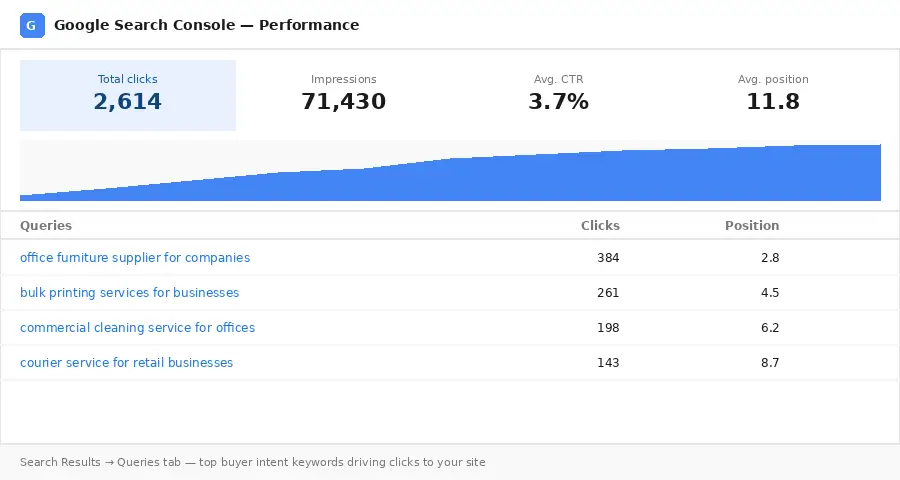
What you will see here: Four key numbers sit at the top of this report. Total clicks tell you how many people actually visited your site from Google search. Total impressions tell you how many times your pages appeared in search results. Average CTR shows what percentage of people who saw your site actually clicked on it. Average position shows where your pages typically rank.
What to do with this data: Scroll down and you will see a list of queries, which are the actual search terms people used to find your site. Click on any keyword to see which pages are ranking for it and what position they hold. This is where you identify which keywords are bringing in real buyers and which are bringing in irrelevant traffic.
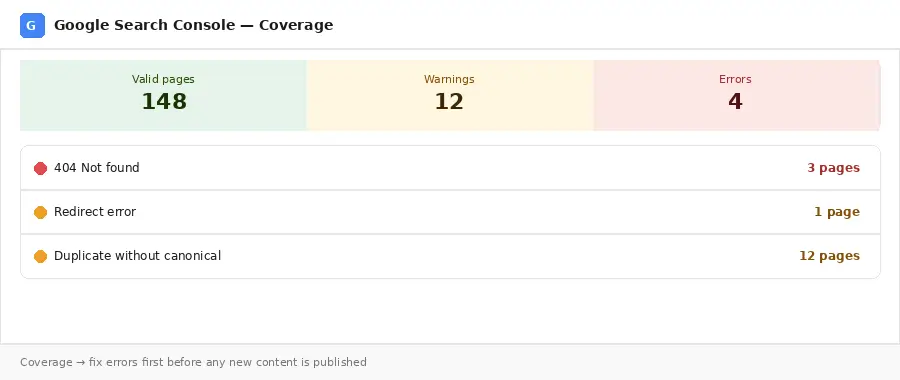
Where to check for technical problems: Click on Coverage in the left sidebar. This shows you how many pages Google has indexed and flags any errors that are preventing pages from being crawled.
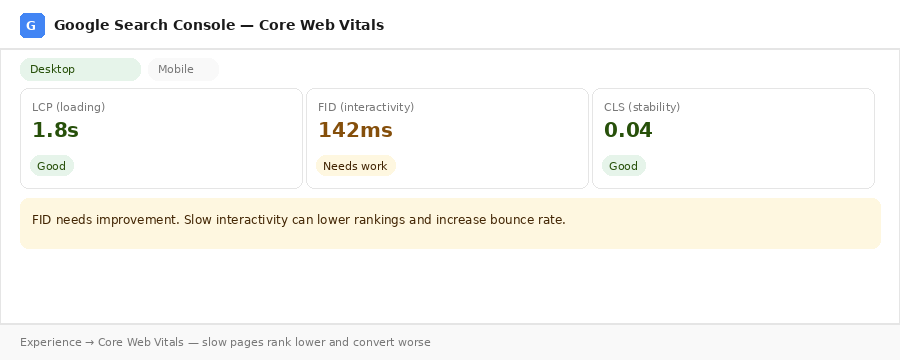
Where to check page experience: Click on Core Web Vitals to see how fast your pages load and whether Google considers your site experience good or poor. Slow pages rank lower and convert worse, so this report matters more than most people realize.
Google Analytics
Connect Google Analytics to your website and set up conversion tracking for every action that represents a lead.
How to see leads from organic search: Go to Acquisition in the left sidebar, then click on All Traffic, then Channels. You will see a breakdown of all your traffic sources. Click on Organic Search to see only the visitors who came from Google.
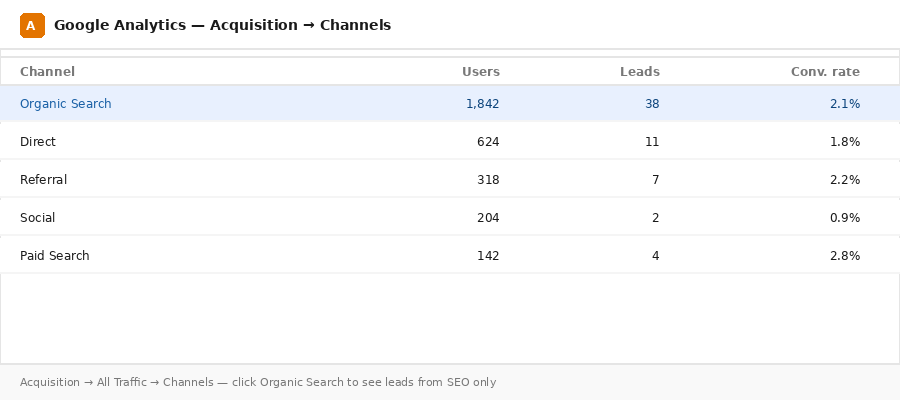
How to set up goal tracking: Go to your Google Analytics account, click on Admin in the bottom left, then click on Goals under the View column. Create a new goal for each type of lead action on your site, such as contact form submissions, phone number clicks, and email link clicks. The goal completions column will show you exactly how many leads came from organic search in any given time period.
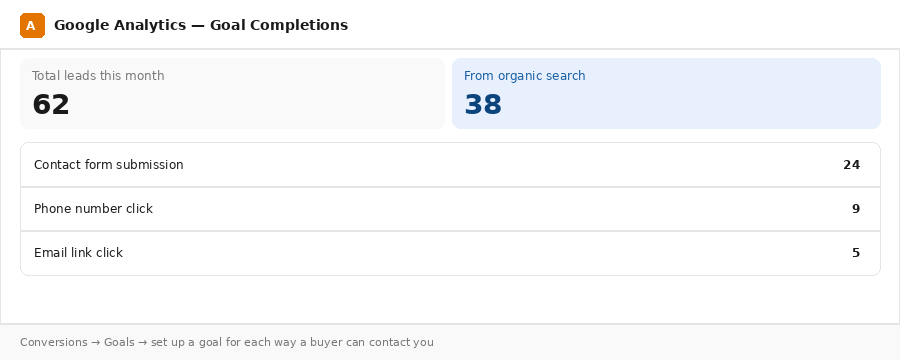
You can also track which specific landing pages are generating the most leads from organic search, and which ones have high traffic but low conversion, so you know exactly where to focus your improvement efforts.
Ahrefs
Ahrefs is a paid tool that gives you data Google Search Console does not, particularly around backlinks and keyword tracking.
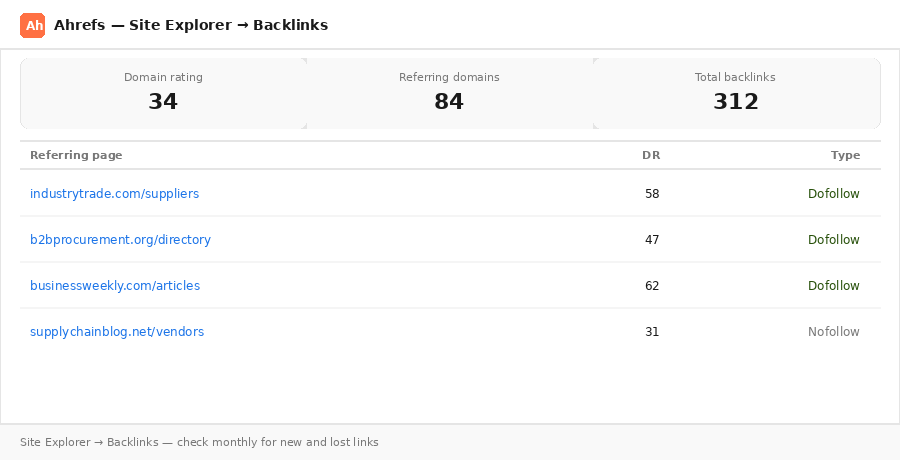
Backlink tracking: Go to Site Explorer, enter your domain, and click on Backlinks in the left sidebar. You will see every website currently linking to yours, when the link was found, and how authoritative that linking site is. Check this monthly to see whether your link profile is growing.
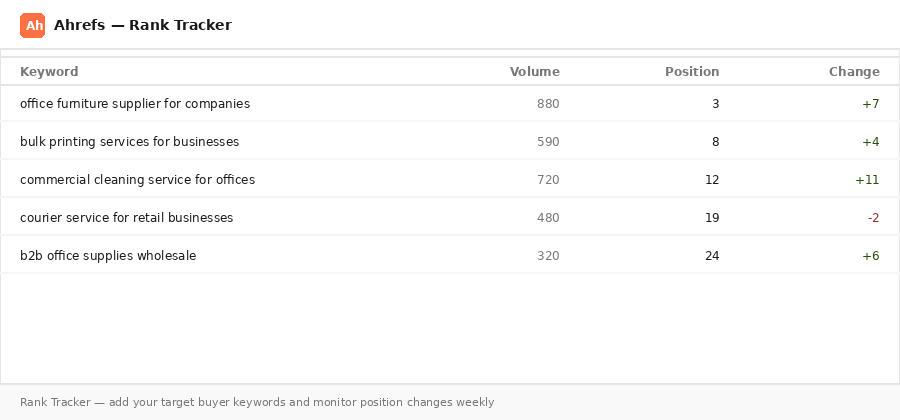
Keyword tracking: Go to Rank Tracker, add your target keywords, and Ahrefs will monitor their positions daily. You can set up email alerts to notify you if any keyword drops significantly so you can investigate quickly.
Semrush
Semrush works particularly well for tracking rankings over time and identifying technical issues on your site.
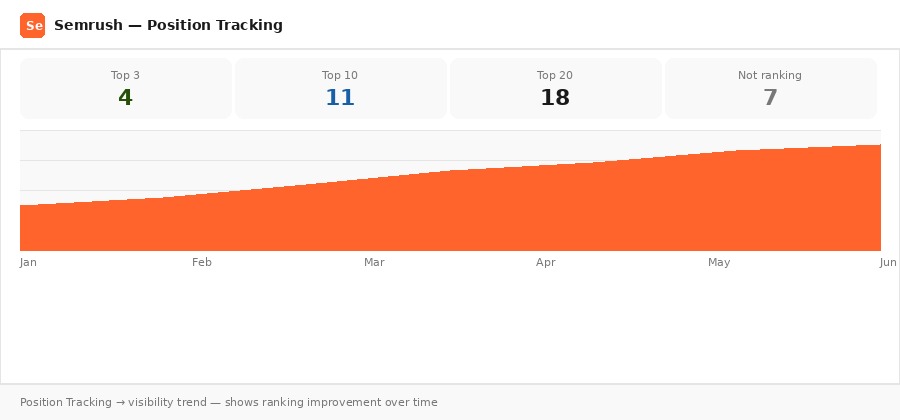
Position tracking: Go to Position Tracking in the left sidebar, create a new project for your domain, and add the keywords you want to monitor. Semrush will update your rankings daily and show you a graph of how each keyword has moved over time.
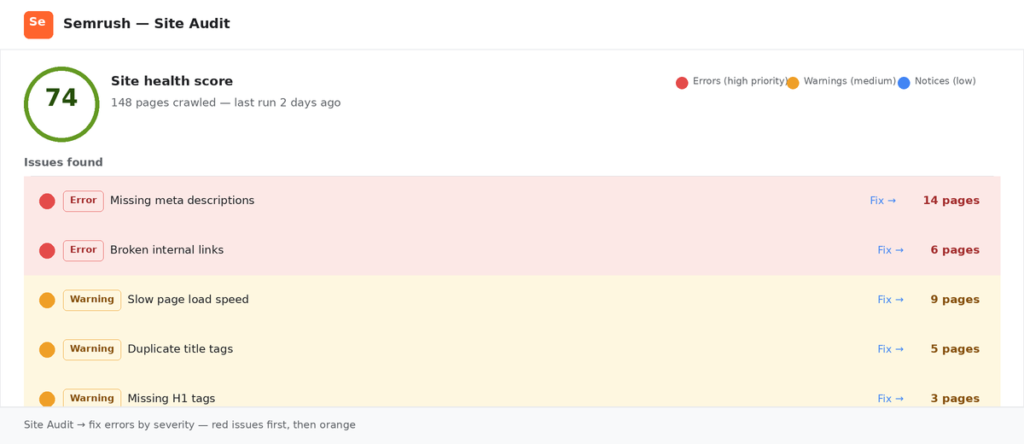
Site audit: Go to Site Audit and run a crawl of your website. Semrush will flag technical issues, broken links, missing meta descriptions, slow pages, and anything else that could be holding back your rankings. It prioritizes issues by severity so you know what to fix first.
Connecting SEO Metrics to Business Outcomes
The final step in measuring B2B SEO properly is connecting your SEO metrics to actual business results. This means knowing not just how many leads came from organic search, but how many of those leads became clients, and what revenue those clients represented.
When you see that SEO generated thirty leads last quarter, twelve of which became paying clients, it stops being a marketing expense and starts being a business investment with a clear return.
Improved Search Visibility in 6 Months for a B2B Packaging Manufacturer and Reached Top 3 from Page 5 in 4 Months for a B2B eLearning Platform are case studies that showed more than better rankings. They also highlighted why tracking matters, because without tracking, it becomes much harder to judge the real progress of an SEO campaign.
How Often Should You Review Your SEO Metrics
Rankings and traffic should be reviewed weekly to catch any sudden drops or unexpected changes quickly. Lead generation from organic search should be reviewed monthly alongside your overall sales numbers. Backlinks and technical health should be reviewed monthly as well.
The companies that get the most out of their SEO investment are the ones that treat measurement as an ongoing habit rather than an occasional check-in. Working with a b2b seo agency that provides clear, consistent reporting makes this significantly easier because you always know what is working, what is not, and what the next priority should be.
Final Thought
SEO without measurement is just activity. Activity without results is just cost.
Track the right numbers, connect them to real business outcomes, and review them consistently. When you do that, SEO stops feeling like a mystery and starts feeling like one of the most predictable growth investments your B2B company can make.