Why Low-Volume B2B Keywords Matter for B2B Leads
A low search-volume number does not automatically make a B2B keyword unimportant. A narrow search can describe a specific requirement that only a small group of suitable buyers has.
The keyword should be evaluated according to the business need behind it. Its monthly search estimate should be one part of that decision rather than the complete decision.
Search Volume Does Not Show the Complete Opportunity
Keyword tools estimate how frequently people search for a term. Google also describes the monthly search figures in Keyword Planner as estimates.
The number does not explain:
- Who performs the search
- What type of company they represent
- Whether the company fits your offer
- How urgent the requirement is
- How much a suitable customer could be worth
- Whether the searcher needs information or a provider
Consider these two searches:
Project management software
Project management software with client access for engineering firms
The first search reaches a wider market. The second search describes a particular function and type of business. It may have less search volume, but the requirement is clearer.
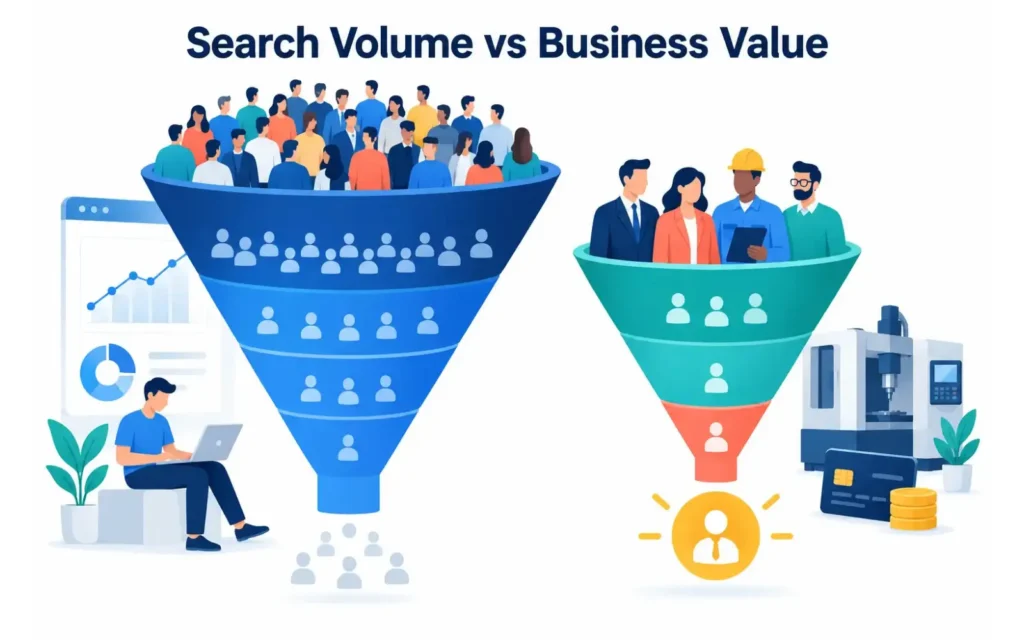
This does not mean that every long keyword deserves a page. It means that volume alone cannot determine its business value.
Look for a Specific Business Requirement
A useful low-volume keyword usually contains a detail that changes what the buyer needs.
That detail could identify:
- A required integration
- A particular workflow
- A product specification
- A compliance requirement
- A supported location
- A type of business
- A technical problem
- An existing system being replaced
- A particular user role
For example, “invoice automation software” describes a broad product category. “Invoice approval software for multi-entity finance teams” adds an operational requirement.
A SaaS buyer might search for “expense software with NetSuite integration.” A manufacturer could search for “high-temperature gasket for steam systems.” A FinTech company may need “payment reconciliation software for multiple gateways.”
Each additional detail gives the page a clearer subject. The writer can explain the exact requirement instead of producing another general page about the broader product category.
Where Buyers Talk About Their Problems
B2B buyers often discuss their problems in communities and forums before they formally start evaluating vendors. The language they use in those conversations can be similar to what they later type into a search engine.
This makes online communities a useful source of low-volume keyword ideas in B2B.
LinkedIn Groups
Go into LinkedIn groups related to your industry and look at the genuine questions practitioners ask each other.
You may find questions such as:
- “Has anyone found a good way to handle vendor onboarding without it taking three weeks?”
- “What are people using to track contractor compliance across multiple sites?”
These are real problems described in the buyer’s own language. They may point towards keywords worth researching.
A discussion about tracking supplier certificates could lead a manufacturer to investigate terms around “supplier compliance tracking software.” A question about moving custom fields between two platforms could reveal a SaaS migration topic.
Reddit Discussions
Reddit works in a similar way when your target buyers participate in relevant communities.
A procurement professional asking how other teams handle purchase-order approvals while working remotely may reveal useful keyword language that a tool does not show clearly.
You might also find a logistics manager asking how other companies handle customs documents for international shipments. That question could lead to a more specific topic than a broad keyword such as “logistics services.”
These discussions also provide useful context. They show what the buyer is trying to solve and which parts of the problem require more explanation.
Quora Questions
Quora can help you understand how buyers phrase questions around solutions.
Search your core service category and look at relevant questions. The wording may reflect how people describe a problem before they know the formal name of the service they need.
For example, a question about paying multiple sellers on an online marketplace could lead to a FinTech term such as “vendor payout software for marketplaces.”
None of this replaces keyword tools. It fills the gap that tools may not fully cover, which is the actual language buyers use when they are dealing with a problem.
How to Read a SERP to Decide If a Low-Volume Keyword Is Worth Targeting
Search volume tells you how many people may search. The SERP provides clues about what those people want to find.
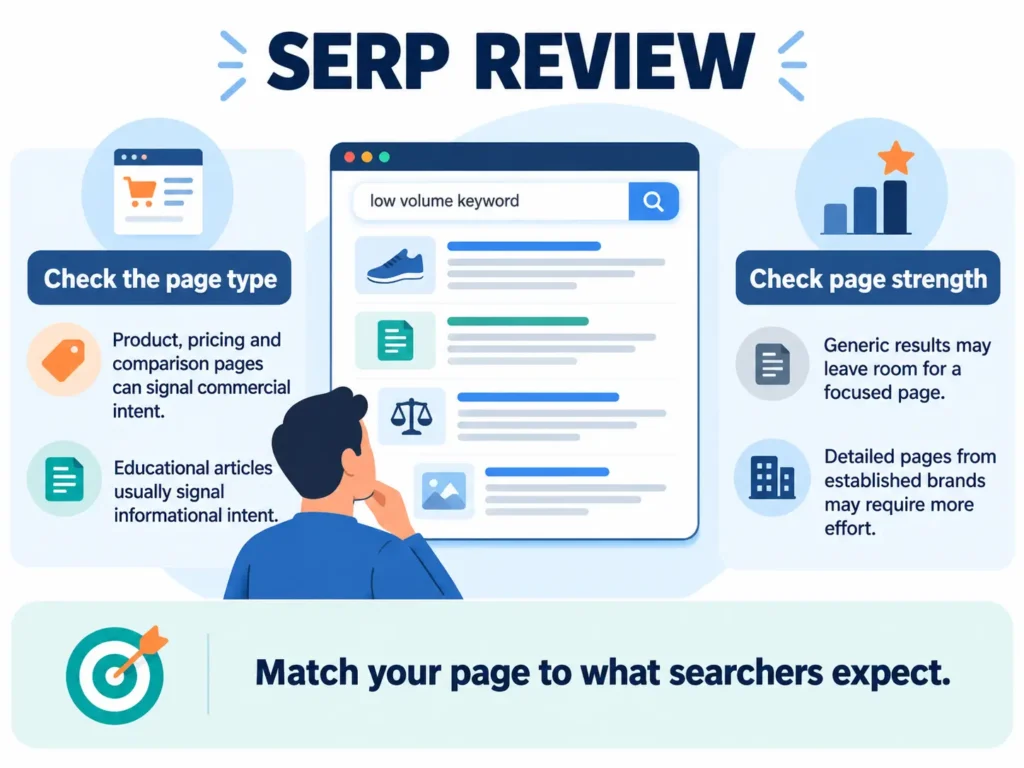
When you search a low-volume keyword, look at two things.
What Type of Pages Are Ranking?
If the first page shows product pages or pricing pages, the keyword may carry commercial intent. Comparison articles can also indicate that people are evaluating options.
When the results mainly contain educational blog posts, the intent may be informational. Direct conversion may therefore be lower, although the keyword could still support an earlier stage of the buying process.
The goal is to match your page format with what searchers appear to expect.
A search for “document management software with SSO” could require a feature or product page. A search for “how to reconcile marketplace seller payments” could require a detailed guide.
How Strong Are the Existing Pages?
Review how well the ranking pages answer the query.
If the results are generic and do not address the specialist use case, there may be room for a more focused page.
For example, pages ranking for “filling machine for viscous liquids” may discuss filling equipment without providing information about suitable materials or operating ranges. A manufacturer with confirmed technical details could answer the requirement more clearly.
A keyword dominated by established brands with detailed content may require more effort. Whether that effort is worthwhile depends on the commercial value of the potential buyer.
SERP analysis can guide your decision, but it cannot predict exactly how quickly a page will rank.
Pages may also struggle because of technical issues that affect crawling or indexing. Keyword choice should not be treated as the only possible reason for weak rankings.
Confirm the Opportunity With Business Evidence
A keyword tool can show an estimate, but business information can show whether the search represents a genuine requirement.
Use several signals before deciding to create a page.
Sales Enquiries
Review the questions prospects ask during calls and email conversations. Repeated questions about the same integration or specification can support a page even when the related keyword has little reported volume.
For example, several manufacturers may ask whether an industrial pump can handle abrasive materials. That repeated requirement gives the company a reason to explain the application properly.
Support and Implementation Questions
Existing customers can reveal missing information.
A SaaS company may repeatedly receive questions about importing data from another platform. A FinTech provider may receive questions about reconciliation reports. These patterns can identify subjects that deserve clearer content.
Website Search Data
Internal site-search records can show what visitors try to find after reaching the website. Searches for a model number or compatibility detail may reveal that the information is difficult to locate.
Search Console Queries
The Search Console Performance report shows the queries for which a site received impressions or clicks. Filter the data by page and review longer queries connected to suitable enquiries.
A single query may appear infrequently. Several related queries can still reveal a consistent requirement.
Product and Sales-Team Confirmation
The final check should confirm that the company can actually serve the requirement.
Do not create a page for an integration that has not been released. Do not describe an industrial product as suitable for an application without technical confirmation. FinTech claims should match the product’s current capabilities and approved markets.
Decide Whether the Keyword Needs a New Page
Not every low-volume keyword needs a separate URL. Choose between a new page and an addition to an existing page.
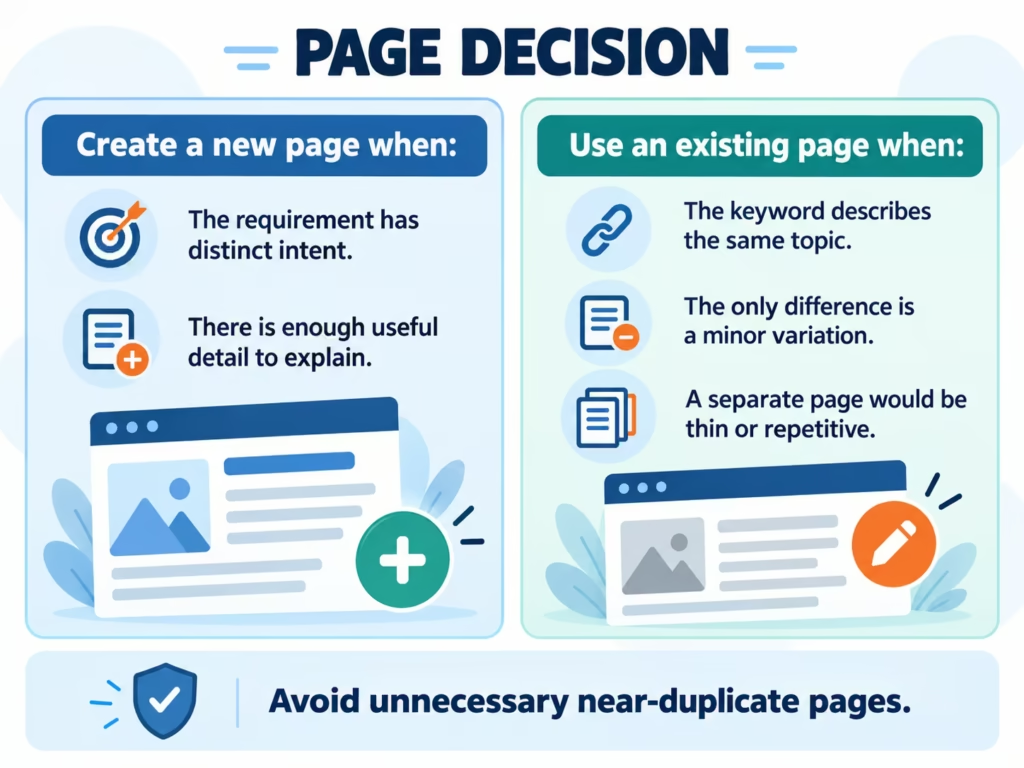
A separate page becomes more reasonable when several signals are present:
- The query represents a distinct business requirement.
- The company has a suitable product or service.
- The reader needs information that is absent from the current page.
- The subject supports a substantially different explanation.
- Sales or customer data confirms interest in the requirement.
- The company can provide specific evidence or technical details.
Add the information to an existing page when the subject can be answered in one useful section.
For example, a SaaS company does not need a separate page for every minor feature. A dedicated integration page can make sense when its setup and supported actions require a detailed explanation.
A manufacturer should not create separate pages for equivalent measurements when the product information remains the same. One complete specification page would be more useful.
Build the Page Around the Requirement
The page should answer the narrow requirement that created the search.
A useful structure can include:
- Direct answer: Confirm whether the product or service supports the requirement.
- Relevant details: Explain the feature or specification involved.
- How it works: Describe the applicable process.
- Requirements: State what the customer needs to provide.
- Limitations: Clarify what is not supported.
- Evidence: Add verified specifications or screenshots where relevant.
- Next action: Give the reader a suitable way to continue.
A page about “expense software with NetSuite integration” should explain the supported connection. It should not begin with a long history of expense management.
A FinTech page about marketplace payouts should explain how funds move between the platform and its sellers. A page about a food-grade mixing tank should provide confirmed material and capacity information before general promotional copy.
Avoid Repeating One Template Across Many Pages
Low-volume keywords can tempt businesses to create a large number of similar pages. Changing the industry or product name does not create useful content when the explanation remains the same.
For example, these pages should not contain identical copy:
- CRM for manufacturers
- CRM for distributors
- CRM for wholesalers
Each page needs information that reflects the relevant sales process. If the same explanation applies to all three audiences, one broader page may be sufficient.
Google’s spam policies identify large numbers of pages created mainly to manipulate rankings rather than help users as scaled content abuse.
The risk does not come from the keyword having low volume. The problem appears when pages lack distinct information and exist mainly to capture similar searches.
When a Low-Volume Keyword Is Not Worth Targeting
A low-volume keyword should be rejected when the business cannot provide a useful answer.
Do not create the page when:
- The product does not support the requirement.
- The term describes an unrelated market.
- The page would repeat existing information.
- The company cannot confirm the technical details.
- The keyword depends on an unavailable integration.
- The only change would be a location or industry name.
- The search has no reasonable connection with the company’s offer.
Low volume is not automatically a reason to reject a keyword. However, specificity without relevance is not valuable.
The strongest opportunities are narrow searches that match a genuine requirement and a capability the company can clearly demonstrate.