B2B Referral Programs Explained: Types and Lead Generation
Many B2B companies spend on outbound outreach and paid campaigns to find new buyers. Referral programs work differently. Instead of relying only on reaching strangers, they turn existing customers and partners into a source of new introductions.
A referral can bring something outbound emails and ads may not provide on their own: existing trust. When a business hears about a product from someone it knows, some hesitation connected with a cold pitch can be reduced from the start.
What Is a B2B Referral Program?
A B2B referral program is a structured way of encouraging existing customers or partners to introduce potential buyers to a business. Employees can also participate when the company has an internal referral process.
It is more organised than casually asking customers whether they know someone who may be interested. A formal program explains who can participate and what counts as a suitable referral. It also states when the referrer earns a reward.
The reward does not always need to be financial. A software company could offer account credit. A formal business partner may prefer commission linked to a completed sale.
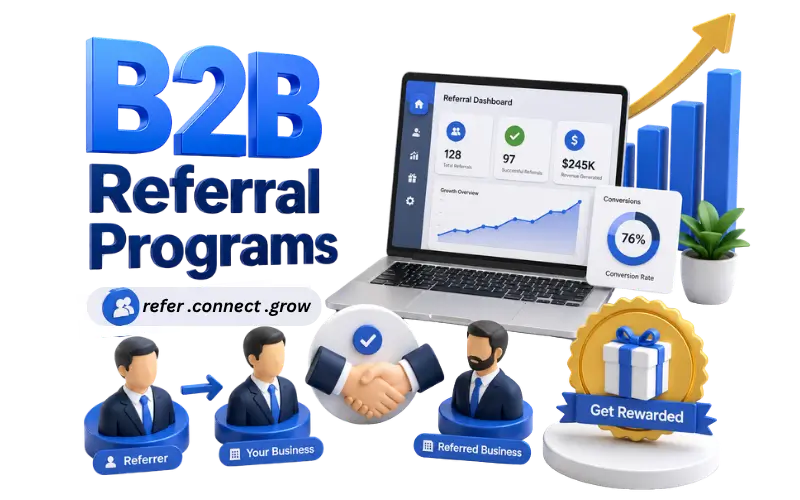
A basic referral journey can look like this:
Customer or Partner → Introduction → Qualification → Sales Follow-Up → Reward
This structure makes the process clear for the referrer. It also gives the company a reliable way to record each introduction and manage the next step.
Why Referrals Work Well in B2B Sales
B2B buyers often compare several vendors before contacting sales. A purchase may also need approval from other people inside the company.
A referral changes the starting point of this process. The person making the introduction may have already explained what the company offers and why it could be relevant to the buyer.
Because some basic context is already available, the first sales conversation can focus more closely on the buyer’s situation. The referred contact may also feel more comfortable responding because the message is connected with someone they know.
However, a referral does not confirm that the buyer is ready to purchase. Sales still needs to understand the requirement and check whether the offer is suitable. The value of the referral is that it creates a warmer beginning, not that it guarantees a sale.
Types of Referral Programs That Generate B2B Leads
B2B referrals can come from different relationships around a company. Some introductions come from customers who have used the product. Others come from partners who already work with similar buyers.
Understanding these referral types helps a company decide who to invite and how each program should work.
1. Customer Referral Programs
A customer referral program encourages existing customers to introduce other businesses that may need the same product or service.
For example, a customer who solved a reporting problem may know another company facing something similar. Their experience gives the introduction a clear reason and helps the referred buyer understand why the offer could be relevant.
The request should happen at a natural point in the relationship. A renewal can provide a suitable opportunity because the customer has had enough time to use the product. A positive account review can also open the conversation.
The request should be specific rather than broad:
Do you know another operations manager dealing with the same reporting problem your team faced?
This gives the customer a clearer idea of who may be suitable and makes the request easier to act on.
2. Partner and Affiliate Referral Programs
Partner referral programs involve consultants or agencies that work with the same type of buyer as the company.
A consultant may introduce a client that needs related software. An agency may refer a customer that requires a service outside its own offer.
These partners may not use the product themselves, but they understand the buyer’s situation. This allows them to make an introduction with a clear reason behind it.
Partner referrals often begin through a direct introduction. Affiliate referrals usually rely on tracked links or referral codes.
When referrals happen regularly, a formal agreement should explain what qualifies. It should also state when the partner earns a reward. This prevents confusion as the program grows.
3. Employee Referral Programs
An employee referral program allows team members to introduce companies from their professional networks.
Employees in customer-facing roles often hear about business problems during industry conversations. Other team members may know suitable contacts from previous roles.
The company should provide a clear internal process for these introductions. It should explain what information is required and who will manage the follow-up.
Employees should not share someone’s contact details without permission. A direct introduction gives the referred person an opportunity to accept the conversation and provides useful context for the sales team.
4. Community and User Group Referral Programs
Community referrals come from customer groups or professional communities connected with the product.
A user may recommend the company when another member describes a related problem. The recommendation feels natural because it appears within an existing peer discussion rather than as an unexpected sales message.
Companies can support these referrals by providing useful pages or guides that members can share. The community should not become a constant promotional channel, so each recommendation should remain connected with the topic being discussed.
Building a Referral Program That People Use: Meaning and Process
Building a referral program means creating a clear process that customers or partners can understand without extra help. The program should explain who to refer and how the introduction should be made. It should also show what happens after the referral is submitted.
1. Define the Referral You Need
Start by deciding what a suitable referral looks like.
Customers should understand the type of business the company can support. They also need to recognise the problem connected with the offer.
The description does not need to become a long qualification document. It only needs to give the referrer enough information to identify a relevant opportunity.
For example, a CRM provider could ask for introductions to service companies that struggle to track sales conversations. This is clearer than asking for any business that may need software.
2. Choose Suitable Referrers
Begin with customers who have used the product long enough to understand its value.
Partners who regularly work with the target market can also make relevant introductions. Starting with a smaller group allows the company to review the early referrals before opening the program more widely.
This also gives the team time to improve the request and fix any unclear steps.
3. Ask at the Right Time
A referral request feels more natural after the customer has experienced a useful result.
A completed project can create a suitable moment. A renewal can also show that the customer is comfortable continuing the relationship.
Avoid asking while the customer is dealing with an unresolved problem. The request should follow a positive experience rather than interrupt a difficult one.
4. Make the Request Clear
A broad request such as “refer someone” gives the customer little direction.
A better request names the type of buyer the company wants to reach. It can also connect the request with a problem the customer has already solved.
The customer should still feel free to decline. A referral program should make introductions easier without making customers feel responsible for finding sales leads.
5. Keep the Introduction Simple
The referral process should require little effort.
A direct email introduction can work well for a professional service. A short form may be more suitable for a larger customer program.
The referrer should not need to collect detailed sales information. The company can ask further questions during qualification.
6. Explain the Reward
The referrer should know what reward is available and when it becomes due.
Some programs provide the reward after a qualified introduction. Others wait until the referred company completes a purchase.
The reward should match the relationship. Account credit can suit a software customer, while commission can suit a formal partner.
7. Track and Follow Up
Every introduction should be recorded with the referrer’s name and submission date. The same record can show the current lead stage and reward status.
A simple referral process can look like this:
Choose Suitable Referrers → Make a Clear Request → Receive the Introduction → Qualify the Lead → Follow Up
The first sales message should mention who made the introduction. This keeps the original context and makes the follow-up feel connected rather than generic.
Where Referral Programs Fit Alongside Other Lead Sources
Referral programs are rarely a company’s only source of leads. They normally work alongside other marketing and sales activity.
Outbound prospecting can help a newer company reach buyers before it has a large customer base. Content and SEO can attract people who are already researching a problem.
Referral programs add a relationship-based channel to this wider approach. They become more useful once customers or partners understand the offer well enough to recommend it.
The program still needs regular attention. Each introduction should be recorded and followed up rather than being left to progress on its own.
Common Mistakes That Limit Referral Results
Several problems can reduce participation or bring in unsuitable introductions:
- Asking too early: A new customer may not have enough experience to recommend the company confidently.
- Making a vague request: Customers may struggle to think of someone when the target buyer is unclear.
- Using the wrong reward: An incentive that suits a customer may offer little value to a formal partner.
- Keeping the program hidden: Customers cannot participate when they do not know the program exists.
- Making referrals difficult: A long form can discourage someone who was ready to make an introduction.
- Delaying follow-up: The original context can weaken when the referred contact receives no response.
- Failing to track referrals: Poor records make it difficult to issue rewards or measure results correctly.
These issues do not always require a complete program redesign. In many cases, the request needs to be clearer or the submission process needs to become easier.
How to Measure Whether a Referral Program Is Working
Referral volume provides a useful starting point, but it does not show whether the introductions are suitable.
- Total referrals received: The number of introductions submitted during a selected period.
- Qualified referral rate: The percentage that match the company’s criteria.
- Referral-to-opportunity rate: The percentage that become active sales opportunities.
- Lead-to-customer conversion rate: The percentage that later become customers.
- Time to first response: How quickly sales contacts the referred company.
- Time to close: How long referred opportunities take to complete the sales process.
- Referral pipeline value: The estimated value of active opportunities created through referrals.
- Program participation rate: The percentage of eligible people who have submitted a referral.
These numbers should be reviewed together. A high referral count has limited value when few introductions match the target customer profile.
Tracking these metrics over time can also show where the process needs attention. For example, strong referral volume with slow follow-up points to an internal response problem rather than a lack of participation.
Tools for Managing a B2B Referral Program
A referral program needs a clear tracking process. The company should record who made each introduction and whether the lead moved forward. Reward status should remain in the same system.
Quick Comparison
| Tool Type | Best For | Examples |
|---|---|---|
| Spreadsheets or CRM fields | Small programs with low referral volume | Google Sheets, HubSpot, Pipedrive |
| Dedicated referral software | Growing customer referral programs | Referral Rock, Rewardful |
| Combined partner and referral platforms | Companies managing both program types | PartnerStack, impact.com, FirstPromoter |
| CRM-native tracking | Companies that want to avoid another platform | HubSpot, Salesforce |
1. Manual Tracking: Spreadsheets and CRM Fields
Manual tracking is suitable when only a few referrals arrive each month.
- Google Sheets: Records the referrer’s name and the referred contact. The team can also add the date and current status.
- Dedicated referral email: Gives customers one place to send introductions.
- CRM tag or custom field: Marks a lead as referred and keeps the source connected with the sales record.
This method is simple to start because it uses a basic process. However, every update must be added manually, which can become difficult as referral volume grows.
2. Dedicated Referral Software
Dedicated referral software is built for structured customer programs. These tools can create tracked links and record the referrals generated through them.
- Referral Rock: Helps companies create referral links and manage reward rules. Participants can also check the status of their referrals.
- Rewardful: Connects referral activity with Stripe payments. It is mainly designed for SaaS and subscription companies that calculate commission from completed payments.
Dedicated software becomes useful when spreadsheet tracking takes too much time. It can also provide a clearer way to manage rewards as more people join the program.
3. Combined Partner and Referral Platforms
These platforms are suitable when a company manages customer referrals alongside a formal partner or affiliate program.
- PartnerStack: Helps agencies or consultants submit leads. It also supports partner activity and commission management.
- impact.com: Brings referral activity and broader partnership programs into one system.
- FirstPromoter: Tracks affiliate and customer referrals for SaaS or subscription businesses.
A combined platform keeps related programs in one place. It can also support different rewards for customers and formal partners, which makes the overall process easier to manage.
4. CRM-Native Referral Tracking
CRM-native tracking keeps referral information inside the sales system the company already uses.
- HubSpot: Custom properties can record the referrer’s name and referral source. Workflows can then support internal follow-up.
- Salesforce: Custom fields and reports can keep referral details connected with later sales activity.
This approach avoids creating a separate referral database. However, the CRM may require additional setup before the process works smoothly.
Which Option Should You Use?
- A few referrals each month → Use a spreadsheet or CRM field.
- Referral volume is growing → Consider dedicated referral software.
- Customers and formal partners both refer leads → Use a combined platform.
- The team wants to avoid another tool → Build the process inside its existing CRM.
The simplest approach is to begin with the tools the company can manage reliably. A move to dedicated software makes sense when tracking referrals or managing rewards starts taking time away from lead follow-up.
When Is the Right Time to Launch a Referral Program?
A referral program is easier to launch after customers have had enough time to experience the product or service. At that point, they can make a recommendation based on their own experience rather than a limited first impression.
Renewals or positive feedback can help identify customers who may be ready to make an introduction. The company does not need a large customer base to begin. A smaller group of satisfied customers can provide enough referrals to test the process and show where improvements are needed.
Before launching, decide who will manage each introduction and how quickly the referred lead should receive a response. The qualification rules should already be clear, and the reward process should be easy to understand.
Starting with a limited group gives the company time to improve the process before inviting more customers or partners. Once tracking and follow-up are working smoothly, the program can become a useful part of the company’s wider B2B lead generation approach.