Lead Scoring: Meaning, Types, and Models for B2B Companies
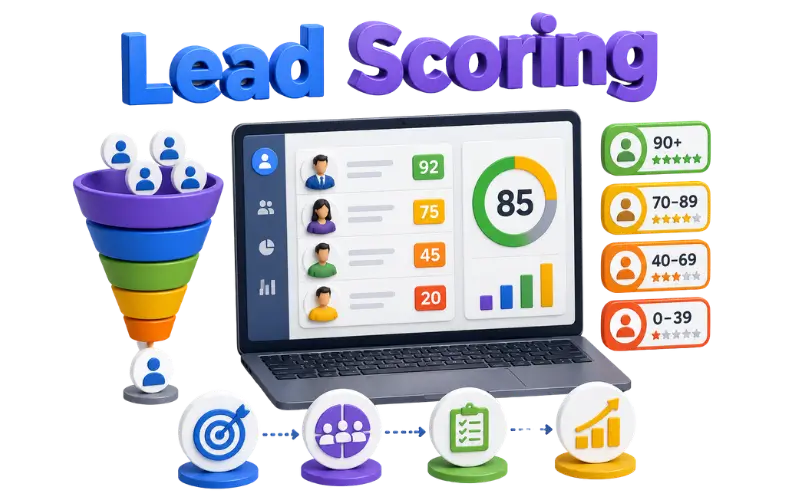
Not every lead that enters a B2B pipeline requires the same level of attention. Some leads are closer to a purchase, while others are still researching. Other contacts may not match the company’s offer.
Lead scoring helps sales and marketing teams identify which leads should receive attention first. This allows them to focus their follow-up on people showing stronger buyer fit or purchase interest.
What Is Lead Scoring?
Lead scoring is a way of ranking leads based on how likely they are to become paying customers. Each lead is given a score, usually a number, based on who they are and how they have interacted with the company.
A higher score generally means the lead is closer to being sales-ready. A lower score may show that the lead needs more nurturing or does not closely match the target customer profile.
The score itself is not the goal. It helps the team decide where to spend its time first.
Why Lead Scoring Matters in B2B
B2B sales teams often receive leads from different sources. These may include website forms or content downloads. Demo requests and event registrations also bring leads into the pipeline.
Without a way to rank them, sales representatives might treat a casual guide download in the same way as a demo request from someone showing clear buying intent.
Lead scoring helps separate these situations. Sales can focus on leads showing stronger interest, while other contacts remain in a suitable nurturing process.
It also helps marketing understand which types of leads become sales opportunities. This provides more useful information than looking only at how many leads each campaign generates.
A shared scoring model gives sales and marketing a clearer definition of a suitable lead. This makes lead qualification more consistent across both teams.
Types of Lead Scoring Models
There is no single scoring model that suits every B2B company. The right approach depends on the available data and how the company’s buyers make decisions.
Many companies begin with one model. Others combine different methods to measure both buyer fit and interest.
Demographic and Firmographic Scoring
This model scores a lead based on who they are and the company they work for. It focuses on profile information rather than the actions the lead has taken.
Common factors include:
- Job title
- Seniority
- Company size
- Industry
- Location
This type of scoring is useful early in the process because it can be applied as soon as a lead completes a form.
For example, a lead from a relevant industry may receive additional points. Someone in a role connected with the purchase may also receive a higher score.
However, this information does not show the lead’s current level of interest. It only shows whether the person and company match the general profile of a suitable customer.
Behavioural Scoring
Behavioural scoring looks at the actions a lead takes. This may include visiting a pricing page or attending a webinar. Requesting a demo is another important behavioural signal.
Each action receives a point value based on how closely it is connected with buying interest.
For example, visiting a pricing page usually shows stronger intent than opening a general newsletter. A demo request should receive a higher score because the lead has directly asked to speak with the company.
Behavioural scoring also helps show when a lead’s interest changes. A contact might remain inactive for several months and then begin visiting important product pages.
This increase in activity gives the team a reason to review the lead and decide whether follow-up is suitable.
Predictive Lead Scoring
Predictive scoring uses historical data to identify patterns among leads that became customers. Some systems use machine learning to examine lead attributes and behaviour.
Instead of manually assigning every point value, the model studies earlier results and applies those patterns to new leads.
This approach can reveal connections the team did not notice through manual review. However, it needs enough reliable historical data to produce useful scores.
A company with only a small number of completed deals may not have enough data for predictive scoring. A rules-based model is usually more practical in that situation.
Rules-Based Scoring
Rules-based scoring is a common starting point for B2B companies building their first lead scoring system.
The team manually assigns points to selected attributes and actions. These values are based on what the company already knows about its target buyers and previous customers.
For example:
- Director-level job title: 10 points
- Pricing page visit: 15 points
- Demo request: 20 points
Rules-based scoring is straightforward to set up and explain to the sales team. It still needs regular review because buyer behaviour and company priorities change over time.
Building a Rules-Based Lead Scoring Model Step by Step
A rules-based model begins with information about previous customers. The team then turns those findings into scoring rules and checks how well they work.
A simple process looks like this:
Review Best Customers → Score Buyer Fit → Score Lead Behaviour → Set Sales Threshold → Add Negative Points → Review Results
Step 1: Identify Your Best Customers
Meaning: Review previous customers and look for patterns among the strongest accounts.
Explanation: Start with customers that became valuable accounts or remained with the company over time. Deals that closed within a reasonable period may also provide useful information.
These patterns become the foundation of the scoring criteria. The review might show that many suitable customers were mid-sized companies. It may also show that the main contact often held a director-level role.
Step 2: Assign Points to Demographic Fit
Meaning: Give points based on how closely the lead matches the company’s target customer profile.
Explanation: A lead from a suitable company should receive more points than someone outside the intended market.
The company can score details such as job role and business size. Industry fit can also be included when the product is designed for particular markets.
A student or someone from an unrelated company should receive fewer points. Clearly unsuitable leads may receive a negative score.
Step 3: Assign Points to Behaviour
Meaning: Score the actions a lead takes based on how strongly they show buying interest.
Explanation: Not every action should receive the same value. Opening an email shows some engagement, but it does not carry the same intent as requesting a demo.
A pricing page visit should receive more points than reading a general blog post. Starting a trial or contacting sales deserves greater weight.
The values should reflect what the company has observed in its own sales process.
Step 4: Set a Threshold for Sales-Ready Leads
Meaning: Choose the total score at which a lead should be passed to sales.
Explanation: The threshold should be based on earlier conversion data where possible. The team can review the scores of leads that became genuine sales opportunities and use them as a starting point.
A threshold that is too low may send unsuitable leads to sales. Setting it too high could delay follow-up with leads showing clear buying interest.
The first threshold does not need to remain permanent. It should be adjusted when lead outcomes show that the current number is not working well.
Step 5: Include Negative Scoring Where Relevant
Meaning: Reduce the score when a lead shows poor fit or declining interest.
Explanation: Negative scoring prevents unsuitable leads from building a high total through general activity.
Possible negative signals include:
- Unsubscribing from marketing emails
- Working in an unrelated industry
- Holding a role with no involvement in the purchase
- Remaining inactive for a long period
- Using a personal email address for an enterprise enquiry
These signals should be weighted carefully. A personal email address does not automatically mean the lead has no value.
Step 6: Review and Adjust Regularly
Meaning: Revisit the model instead of treating it as a one-time setup.
Explanation: Buyer behaviour changes as the product develops or the company enters a new market. A scoring rule that worked earlier may become less useful later.
Review which high-scoring leads became customers and which ones failed to progress. Sales feedback also shows whether the current threshold is sending suitable leads.
The team can then adjust the point values or scoring rules based on those results.
Common Data Points Used in B2B Lead Scoring
Most B2B lead scoring models use a combination of buyer fit and engagement data.
- Job title and seniority: Shows whether the person is likely to influence or approve the purchase.
- Company size: Helps confirm whether the business matches the type of customer the product supports.
- Industry: Identifies leads from markets where the offer is relevant.
- Website behaviour: Includes important pages visited and repeat visits.
- Content engagement: Covers actions such as downloading a guide or attending a webinar.
- Direct intent signals: Includes requesting a demo or starting a free trial.
- Email engagement: Looks at meaningful clicks and responses instead of relying only on email opens.
- Lead source: Shows whether the lead came through a referral or another marketing channel.
Not every company needs to use all of these data points. The model should focus on information that has a clear connection with customer fit or buying interest.
Common Mistakes in B2B Lead Scoring
Several problems can cause a lead scoring model to lose accuracy over time.
- Setting up the model once and never reviewing it: The scoring rules may become less useful when the offer or target market changes.
- Giving too much weight to low-intent actions: Email opens or general page views may increase scores without showing clear buying interest.
- Ignoring negative signals: Poor-fit leads may build high scores through repeated activity.
- Building the model without sales input: The scoring rules may not reflect what sales sees during direct conversations.
- Using one model for every product or audience: Different offers may need separate scoring criteria.
- Scoring activity without considering fit: A highly active lead may still be unsuitable for the product.
The model should remain simple enough for the team to understand. Adding more rules does not automatically make it more accurate.
Frequently Asked Questions
What Happens After a Lead Reaches the Sales-Ready Score?
The lead should be reviewed before direct sales follow-up begins. This helps the team confirm that the score reflects buyer fit and meaningful interest rather than activity alone.
Can a Lead’s Score Decrease?
Yes. A score may decrease when a lead becomes inactive or unsubscribes from communication. It may also fall when new information shows that the company or contact does not fit the target profile.
Should Different Products Use Separate Scoring Models?
Separate models are useful when products serve different audiences or involve different buying actions. A signal that matters for one offer may have less value for another.
What Should the Team Do When High-Scoring Leads Do Not Convert?
The team should review the point values and sales-ready threshold. Repeated poor outcomes may show that some activities receive too much weight or that important buyer-fit signals are missing.