B2B Lead Conversion: Why Leads Don’t Convert & How to Fix It
A company can run strong B2B SEO campaigns and rank for relevant keywords, yet still watch many leads go nowhere. Traffic looks healthy and forms get filled, but the sales pipeline remains thin.
The problem is not always that leads are missing. It often lies in what happens after they arrive. Slow follow-up can weaken interest, while unclear messaging can create the wrong expectations.
The Gap Between Traffic and Revenue
Many B2B teams measure success by how much traffic their SEO efforts bring in or how many form submissions a campaign generates. These numbers matter, but they only show part of the result.
A lead is not the same as a customer. Between the moment someone fills out a form and the moment they sign a contract, there are several points where the opportunity can stop moving forward.
Slow follow-up can reduce the buyer’s interest. The offer may not match what the visitor expected. The company may also be speaking with someone who has no real role in the purchase.
Improving this part of the process helps a company make better use of the leads it already generates. Increasing traffic without fixing conversion problems may simply bring more contacts into the same weak process.
Reason One: The Lead Was Never a Good Fit
Not every person who completes a form is a suitable buyer. This often happens when content or advertising is written broadly to attract more traffic instead of the right audience.
A B2B SEO strategy focused mainly on high-volume keywords can bring visitors with limited buying intent. Someone searching for a broad educational topic may only be researching a problem.
A lead may also come from a company that is too small for the offer. In other cases, the person works in an unrelated industry or has no involvement in the buying decision.
How to fix it: Review the characteristics of customers that have been a strong fit for the business. Use those patterns to define the ideal customer profile more clearly.
Choose keywords and offers that connect with the needs of those buyers rather than relying only on search volume.
Lead scoring can then help sales separate suitable opportunities from contacts showing weaker fit. This allows the team to spend more time on leads with a realistic reason to move forward.
Reason Two: Follow-Up Is Too Slow
A person submitting a sales form may be considering more than one vendor. Responding while the enquiry is still fresh gives the company a better opportunity to begin a useful conversation.
When follow-up takes too long, the buyer may already have spoken with another company. Their attention may also have moved to another priority.
A quick response does not guarantee a sale, but it shows that the company is organised. It also allows sales to understand the enquiry before the buyer loses momentum.
How to fix it: Set a clear internal target for the first response. The exact time should reflect the company’s team size and working hours.
An automated confirmation email can tell the lead that the enquiry was received. It should also explain when they can expect a personal reply.
The automated message should support human follow-up rather than replace it.
Reason Three: The Message Does Not Match Search Intent
A page may rank for a relevant keyword, but its message can still fail to match what the visitor wanted.
Someone comparing two tools has a different need from someone searching for pricing. A visitor looking for a basic explanation is also at a different stage from someone requesting a demonstration.
When all these visitors receive the same generic offer, the leads generated may have unclear expectations. The problem continues when sales sends the same follow-up message to everyone.
How to fix it: Review the search intent behind each important keyword and make sure the page responds to that need.
A comparison page should help visitors understand the available options. A pricing-focused page should provide enough commercial information to support the next step.
Follow-up should also reflect the page that brought the lead to the website. This gives the sales conversation a clearer starting point.
A strong B2B SEO strategy does more than bring visitors to the website. It connects the search query with the right page and a suitable next action.
Reason Four: There Is Too Much Friction
Every unnecessary step between interest and conversation gives the lead another reason to leave.
Long forms can make a simple enquiry feel difficult. Confusing next steps may also stop a visitor who was ready to speak with sales.
Some forms ask for information that the sales team does not need before the first conversation. A slow scheduling process creates another barrier when visitors must exchange several emails before booking a call.
How to fix it: Keep only the fields required to route the lead and prepare for the first conversation.
A work email and company name may provide enough information to begin. A short field about the buyer’s needs can add useful context.
The page should also explain what happens after submission. Visitors should know whether they will receive a call or another type of response.
A direct booking option can help people who are ready to speak with someone immediately.
Reason Five: There Is No Nurture Process
Not every lead is ready to buy when they first enter the pipeline.
Some are still learning about the problem. Others need more time before speaking with a vendor.
Treating every lead as either sales-ready or worthless removes contacts that may become suitable opportunities later.
A visitor who reaches an educational page through B2B SEO may not request a demonstration immediately. That does not mean the contact has no future value.
How to fix it: Create a nurture process for leads that fit the target profile but are not ready for direct sales follow-up.
Share content that answers the questions buyers ask as they move closer to a decision. Engagement can then be reviewed over time.
A pricing-page visit or direct reply may show that the lead is becoming more interested. The lead score can then be updated before sales reviews the opportunity again.
The nurture process should remain relevant to the lead’s original interest. Repeated sales messages sent too early can weaken engagement rather than improve it.
Reason Six: Sales and Marketing Define Good Leads Differently
Marketing may view a campaign as successful because it generated many form submissions. Sales may see the same campaign differently if few of those leads become useful conversations.
This difference often comes from unclear qualification rules.
Marketing may focus on engagement, while sales gives more importance to company fit or buying authority. When both teams use different definitions, the handover becomes inconsistent.
Sales may then lose trust in marketing leads, which can affect how quickly new enquiries receive attention.
How to fix it: Create a shared definition of a qualified lead using information from completed deals.
Both teams should agree on the company characteristics that matter. They should also decide which actions show enough interest for sales follow-up.
Reviewing lost opportunities together can reveal whether the problem came from lead quality or a later part of the sales process.
The lead scoring model should reflect what the company learns from these reviews. This gives marketing clearer targeting and helps sales understand why a lead was passed forward.
Reason Seven: The Offer Does Not Match the Buyer’s Stage
Asking every visitor to book a demo assumes that everyone is equally ready to speak with sales.
Someone reading an introductory article is not in the same position as a visitor comparing vendors. A buyer searching for pricing is also showing a different level of interest.
When every page uses the same high-commitment offer, early-stage visitors may leave. Others may complete the form without a clear reason to continue.
This produces leads that look useful in the CRM but show little interest during follow-up.
How to fix it: Match the offer to the visitor’s current stage.
An early-stage visitor may prefer an educational resource or a simple assessment. Someone comparing solutions may be ready for a product guide or a relevant customer example.
Demo requests and consultations are more suitable for visitors showing stronger commercial intent.
Matching the offer with the visitor’s situation gives leads clearer expectations about what happens next.
Building a Better Path From Lead to Customer
Many conversion problems appear after the lead already exists. The company attracts the visitor, but the steps between initial interest and a sales conversation are not connected clearly.
A strong B2B SEO strategy helps bring relevant visitors to the website. The next part of the process determines whether those visitors become useful opportunities.
A simple lead journey may look like this:
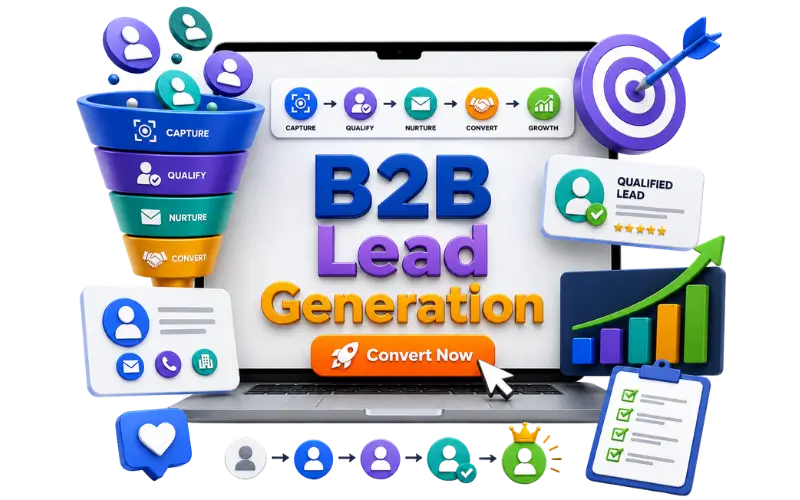
Relevant Visit → Suitable Offer → Form Submission → Lead Qualification → Follow-Up or Nurturing → Sales Opportunity
A high-intent enquiry needs prompt attention. An early-stage contact needs relevant nurturing.
The form and follow-up message should reflect why the visitor reached out. Sales and marketing should also use the same qualification criteria.
When each stage leads naturally into the next, suitable leads have a clearer path towards a sales conversation.
A Quick Way to Diagnose Your Funnel
Before changing the entire process, identify where leads stop progressing.
Start by checking the first response time. Then compare incoming leads with the ideal customer profile.
Review how many qualified leads become sales conversations. When suitable leads receive follow-up but do not move forward, the issue may be the message or offer.
It also helps to compare how sales and marketing define a qualified lead. Different definitions can make campaign reports look positive while the pipeline remains weak.
Useful questions include:
- How quickly does a new lead receive a response?
- How many leads match the ideal customer profile?
- Which pages generate useful sales opportunities?
- Where do qualified leads stop progressing?
- Do sales and marketing use the same qualification rules?
- Are early-stage leads placed into a nurture process?
The answers can show which part of the funnel needs attention first. Fixing the clearest gap is often more useful than changing several parts of the process at the same time.