ChatGPT Ad Formats Explained: Sponsored Cards and Placements
Understanding what ChatGPT ads look like is different from understanding how they are targeted. The format is still fairly simple compared with older ad platforms.
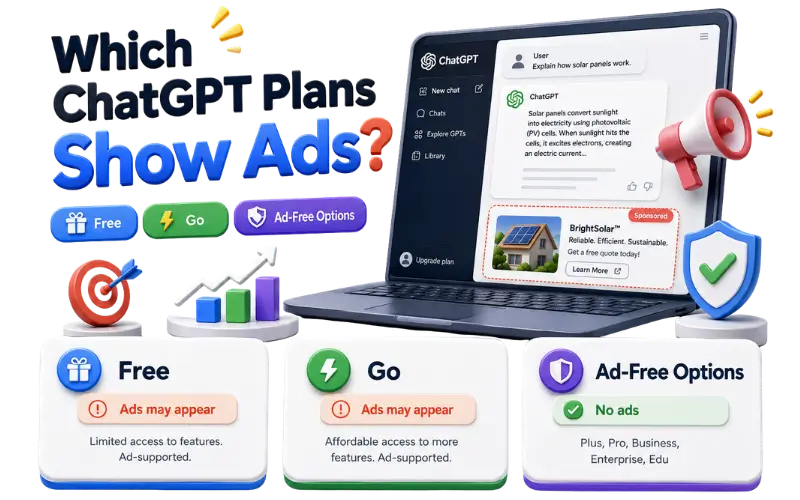
ChatGPT ads currently appear as clearly labeled ad units below a response. They are kept visually separate from the answer itself, so users can clearly tell where the ChatGPT response ends and the paid content begins.
The Core Format: The Sponsored Ad Unit
The main ad format currently used inside ChatGPT is a sponsored ad unit. It appears below a ChatGPT response rather than inside the answer itself.
The current design has a card-style appearance. It gives the advertiser a separate space for the ad while keeping it apart from ChatGPT’s response.
This separation is important because the ad is paid content. OpenAI says ads do not influence the answers ChatGPT gives.
What Goes Into the Creative
A ChatGPT ad currently uses a fairly simple set of creative elements.
| Element | Purpose |
|---|---|
| Advertiser name | Shows which business is running the ad |
| Favicon or logo | Helps users recognise the advertiser |
| Title | Gives the ad its main headline |
| Copy | Adds more information about the offer |
| Image | Supports the ad visually |
| Landing page | Takes the user to the advertiser’s website |
Compared with older ad platforms, the current format offers fewer creative options.
This makes each part of the ad important. The title should make the offer clear. The copy can then provide useful detail without repeating the same message.
Labeling and Separation
ChatGPT ads are kept separate from the answers above them.
Ads are labeled as sponsored and shown in their own area. This helps users understand when they are looking at paid content.
Seeing an ad below a response also does not mean ChatGPT is recommending that advertiser. The ad is a paid placement and remains separate from the answer.
Advertisers should also make it clear which business is behind the ad. The creative should not try to look like a ChatGPT response or another part of the interface.
Where Ads Appear in the Conversation
Ads currently appear below the end of a ChatGPT response. They are not placed inside the answer itself.
The basic placement looks like this:
User Question
↓
ChatGPT Response
↓
Sponsored Ad Unit
This is different from a search results page, where sponsored links can appear around other results.
It also differs from social media feeds. Ads on those platforms can appear between regular posts as users continue scrolling.
ChatGPT currently keeps sponsored content below the response, giving the ad its own separate placement.
Can More Than One Ad Appear?
The current experience is not always limited to one sponsored card.
OpenAI says users may see one or more ad units below a response when relevant ads are available. An ad unit may also contain more than one item.
So it would be too strict to say that ChatGPT always shows only one ad card.
The number of ads shown can vary depending on the situation.
Manually Created Ads and Product Feed Ads
Advertisers can create ads by adding the creative information directly.
This includes the title and copy. They can also provide an image and choose the landing page.
ChatGPT Ads also supports product-feed campaigns for retail advertisers. These campaigns use information from a product catalog to create ads for different products.
The main difference is how the ad information is added.
With a manually created ad, the advertiser enters the details directly. Product-feed campaigns can use information already stored in the catalog.
Product-feed ads currently use the same general ad-unit format rather than a completely separate placement.
How This Compares to Familiar Ad Formats
ChatGPT’s current ad format is more limited than the range available on older advertising platforms.
| Platform | Common Ad Experience |
|---|---|
| Google Search | Sponsored results around search results |
| Social platforms | Ads within feeds and other placements |
| ChatGPT | Sponsored ad units below responses |
Google and Meta have had many years to develop different ad formats.
ChatGPT advertising is much newer, so the available format is currently more focused. Other formats may be introduced as the platform develops.
What the Title and Copy Need to Do
The current ad format gives advertisers limited space, so the message needs to be easy to understand.
The title should explain the main offer clearly.
For example:
Title:
“Automate Monthly Financial Reports”
The copy can then provide a little more detail:
Copy:
“Bring reporting data together and reduce manual preparation.”
The second line gives useful information instead of repeating the headline.
Short and clear wording can make the ad easier to understand quickly.
The Role of the Image
The current ad unit can also include an image.
The image can show the product or support the main message. It does not need to explain the full offer by itself.
A simple visual may be easier to understand than an image filled with text or too many details.
The title and copy should still make the offer clear without depending completely on the image.
Keeping the Ad and Landing Page Connected
The landing page is where the user goes after clicking the ad.
It should match the offer shown in the creative.
For example, an ad promoting a particular product should normally lead to a page about that product. Sending someone to an unrelated page can make the next step confusing.
A clear connection between the ad and landing page makes the experience easier to follow.
What This Means for Creative Strategy
ChatGPT ads give advertisers limited space, so the message needs to be simple and clear.
The title should explain the offer quickly. The copy should add useful detail, while the image should support the same message.
ChatGPT Ads is still a newer advertising channel, so there are fewer public examples showing which creative approaches perform well. Advertisers may need to test different versions and compare the results.
A good starting point is to keep the ad easy to understand and make sure each part supports the same offer.